The Anatomy of Atay
Moroccan mint tea, locally called atay, is built on three simple ingredients: Chinese gun‑powder green tea, fresh spearmint, and a generous handful of sugar. The tea base arrives in tight, rolled pellets that unfurl when steeped, releasing a vegetal bitterness that the mint and sugar instantly tame. The result is a bright, fragrant brew that stays warm for hours, making it the perfect companion for everything from sunrise prayers to late‑night conversations.
The term “Berber whiskey” circulates in travel guides, but the drink contains no alcohol. Its nickname stems from the way it fuels social interaction the way a spirit might elsewhere. Every Moroccan household owns a round‑bellied teapot with a curved spout; the shape is not decorative—it creates the dramatic high‑pour that aerates the liquid and produces a frothy “head” on each glass.
From Gunpowder to Glass: The Brewing Ritual
- Rinse the tea – Place two teaspoons of gun‑powder tea in the pot, cover with boiling water, and swirl briefly. This first rinse removes dust and awakens the leaves.
- First infusion – Add fresh water, bring to a boil, then let the tea steep for a minute.
- Add mint and sugar – A generous bunch of spearmint (the greener, the better) and enough sugar to make the brew sweet enough to mask the tea’s natural astringency are dropped in.
- The high‑pour – The pot is lifted high above the glasses, a graceful arc that cools the tea and creates a thin layer of bubbles. The first glass is poured, then the pot is returned to the heat for a brief re‑steep before the second and third glasses follow.
Master tea‑makers treat each step as a performance. At Kasbah Tamadot Hotel, the legendary Mohammed Ait Belhaj demonstrates the ritual to guests, explaining that the height of the pour is a visual cue of hospitality. A photograph by Adam Slama captures the moment: a gleaming teapot, a cascade of amber liquid, and a line of waiting glasses. Watching the pour is as much a part of the experience as the sip itself.
Where to Sip – From Riads to Street Stalls
Riads and Salons de Thé
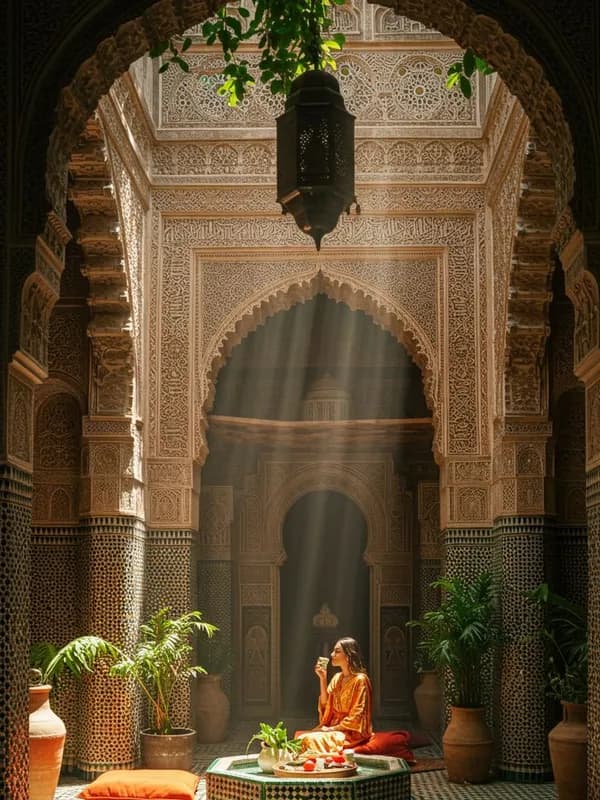
In the medinas of Marrakech and Fes, the most polished version of atay is served in intimate tea rooms. A small, colorful glass sits on a low table beside a plate of Chebakia Being—a honey‑glazed, sesame‑spiced cake that locals often enjoy with tea during the afternoon. The tea here is invariably sweet, and the host will refill your glass three times without prompting; refusing a refill can be read as a slight.
Street‑Level Hospitality
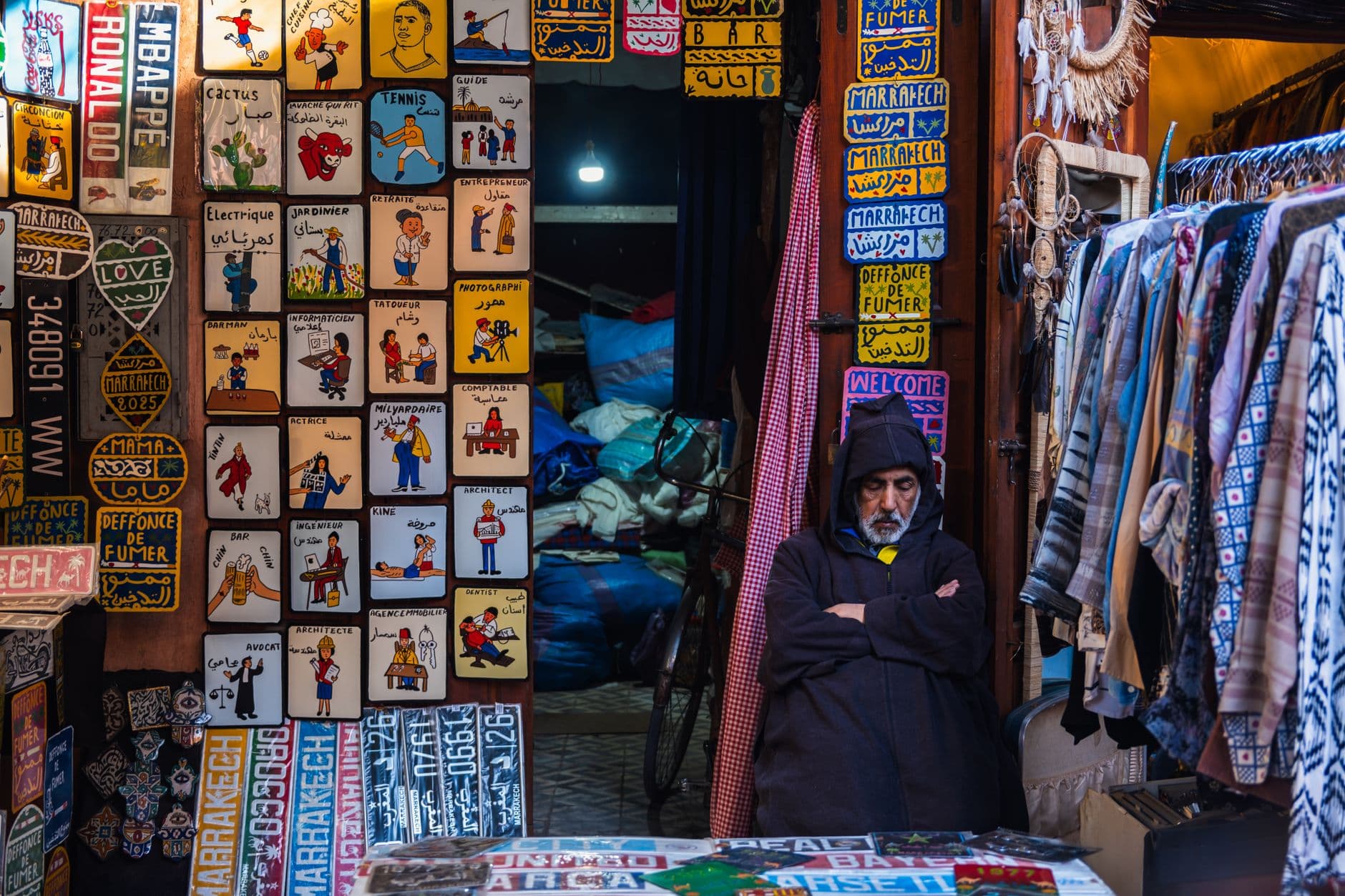
If you wander beyond the tourist corridors, you’ll find Authentic Moroccan Street vendors setting up metal tables beside the Sugar Cane Juice stalls that line the souks. A street seller will pour tea from a modest kettle directly into a glass, often accompanied by a side of Harcha (a semolina flatbread) smeared with La Vache Qui Rit cheese. The tea is less ceremonious but no less sincere; the seller may offer a second glass for the price of a small pastry.
Cafés and Casual Corners
Mid‑day, many cafés in Essaouira and Chefchaouen serve tea alongside Sweet Chermoula Whole Roasted Cauliflower. The dish’s bright, herb‑laden sauce complements the minty sweetness of the tea, creating a balanced palate that locals swear by. Ordering is straightforward: ask for “un verre de thé à la menthe, s’il vous plaît,” and the server will bring a glass, a small plate of sugar cubes, and a sprig of fresh mint.
Etiquette – How to Accept and Offer
- Never refuse the first glass. In Moroccan tea culture, the initial pour is a gesture of welcome.
- Hold the glass by the rim. Lifting the glass by the bowl is considered rude.
- Sip, don’t gulp. The tea is meant to be savored; a rapid gulp can be taken as impatience.
- When you’re ready for more, tap the glass lightly. The host will interpret the tap as a request for a refill.
- If you prefer less sugar, say “un peu moins sucré”. Most hosts will adjust without fuss, but the default is very sweet.
These conventions apply whether you’re seated in a plush salon de thé or perched on a plastic stool beside a busy market stall.
Regional Twists – Beyond the Classic
While the core recipe stays the same, regional variations pepper the national drink with local flavor.
- Northern Rif: Fresh rosemary replaces part of the mint, giving the brew an earthy edge that pairs well with goat cheese.
- Sahara Oases: Dates are sometimes added to the pot, infusing the tea with a caramel note that mirrors the desert’s sweetness.
- Atlas Mountains: A pinch of orange blossom water is introduced, a fragrant nod to the wild orange groves that dot the high valleys.
These tweaks are rarely advertised; you’ll discover them by asking the person preparing the tea. Most will be delighted to explain the story behind their version.
Pairings – Sweet Chebakia and Savory Rfissa
A glass of atay is never served in isolation. The Rfissa Express—a chicken tagine layered over shredded trid (thin, pan‑fried bread) and topped with lentils—makes a hearty companion for tea in the late afternoon. The dish’s savory depth is softened by the tea’s sweetness, creating a balanced finish to the day’s meals.
For a lighter snack, try Chebakia Being. This honey‑drizzled pastry, often dusted with sesame seeds, is traditionally enjoyed during Ramadan but appears year‑round in tea houses. Its crisp texture and fragrant spices echo the mint’s brightness, making the duo a staple of Tea Time across the country.
Insider Logistics – Money, Timing, and Transport
- Cash vs. Card: Small tea glasses sold by street vendors are almost always cash‑only. In established cafés and hotels, both cash and card are accepted, but it’s wise to keep a few dirhams handy for quick purchases.
- Best hours: The mid‑afternoon window (4 – 6 p.m.) is when locals gather for Tea Time. Arriving slightly before the rush ensures you get a seat without waiting.
- Avoiding crowds: In Marrakech, the famous tea salons near Jemaa el‑Fna fill up after sunset. Head there early in the afternoon for a quieter atmosphere.
- Transport: To move between cities, use CTM or Supratours long‑distance buses; they run regularly from Marrakech to Fez (approximately 7 hours). For shorter hops, the ONCF train connects major hubs like Casablanca, Rabat, and Tangier. Within medinas, rely on petit taxis—they’re the only motorised option inside the pedestrian‑only streets.
- Handling touts: In popular souks, vendors may approach you offering tea “on the house.” Politely decline if you’re not interested; a firm “Non, merci” is enough. If you accept, expect a brief chat about the tea’s origin—most enjoy sharing the story.
The Social Currency of Atay
In Morocco, sharing a glass of mint tea is equivalent to extending a hand of friendship. Business deals are often sealed over three successive pours; refusing the tea can be interpreted as a rejection of the proposal. Even in casual settings, a host will keep the teapot on the table for hours, inviting guests to return for refills whenever they wish. This perpetual availability underscores the Moroccan belief that hospitality is an ongoing responsibility, not a single act.
Bringing Atay Home
If you’re inspired to recreate the ritual after you return, source Chinese gun‑powder tea from a reputable spice shop, fresh spearmint from a local market, and use unrefined cane sugar for authenticity. The high‑pour can be mimicked with a tall pitcher; the key is to pour from a height that creates a thin stream, allowing air to mingle with the liquid. Remember that the ritual’s heart lies in the intention to welcome—serve with a smile, and the spirit of atay will travel with you.
FAQ
How sweet is Moroccan mint tea supposed to be?
The traditional brew is noticeably sweet, often described as “sugar‑laden.” Hosts typically add enough sugar to balance the astringency of the gun‑powder tea, but you can request a lighter version by asking for “un peu moins sucré.”
Can I order mint tea at a restaurant without a tea ceremony?
Yes. Most restaurants will serve atay in a simple glass without the high‑pour. The tea will still be prepared with fresh mint and sugar, and the staff will refill it upon request.
What’s the best way to tip the person who prepares the tea?
Tipping is not mandatory, but a small gesture—such as a few dirhams for a street vendor or rounding up the bill in a café—is appreciated. It signals gratitude for the hospitality.
Is it appropriate to bring my own tea to a Moroccan home?
Bringing a box of quality gun‑powder tea can be seen as a thoughtful gift, especially if you know the host enjoys experimenting with blends. However, it’s not required; the host will always provide tea as part of the welcome.