Getting There from Marrakech
The most reliable public‑transport option is a CTM or Supratours coach that runs from Marrakech’s main bus station to the turn‑off at Tazentout. The journey lasts about five hours, winding through the Atlas Mountains and the famous Tizi‑n‑Tichka pass. Once the bus pulls over, you’ll need a short taxi ride—about ten minutes—to the stone walls of Ait Ben Haddou.
If you prefer to skip the long bus ride, hire a private driver for the day. The driver will meet you in the Marrakech medina, take the same mountain road, and wait while you explore the ksar. This costs more but gives you flexibility to linger at Kasbah Telouet or Atlas Studios on the return leg.
Regardless of the method, aim to leave Marrakech before noon. The heat climbs sharply after 2 p.m., and the later you arrive the more likely you’ll encounter the midday crowd of tour groups.
Getting There from Ouarzazate
Ouarzazate sits only 30 km southeast of the ksar, making it the logical base for a relaxed visit. The grand taxi stand beside the city’s bus station dispatches shared taxis that head straight to Ait Ben Haddou. The ride is roughly 45 minutes over a paved road that follows the Ounila valley.
A grand taxi fills the whole vehicle, so you’ll be sharing space with strangers or a small private party. The fare is inexpensive for the distance, and the driver will wait while you wander the alleys before heading back to Ouarzazate.
If you’re already on a CTM line that terminates in Ouarzazate, you can purchase a ticket at the local office and then catch the same grand taxi. Just keep a few dirhams handy for the short taxi leg.
Entering the Ksar: What to Expect
The entrance gate is unmanned; a modest sign indicates a modest contribution for site upkeep. There is no fixed ticket price, but a small cash donation is customary. Bring Moroccan dirhams; the gate does not accept cards.
The ksar opens early, but the best light for photography is just after sunrise when the sun casts long shadows across the mud‑brick façades. Arriving at opening also lets you explore before the heat intensifies and before larger tour groups converge.
Dress modestly out of respect for the local community—shoulders and knees covered is advisable, especially if you plan to step into the nearby market stalls. Comfortable walking shoes are essential; the streets are uneven and steep in places.
Walking the Labyrinth
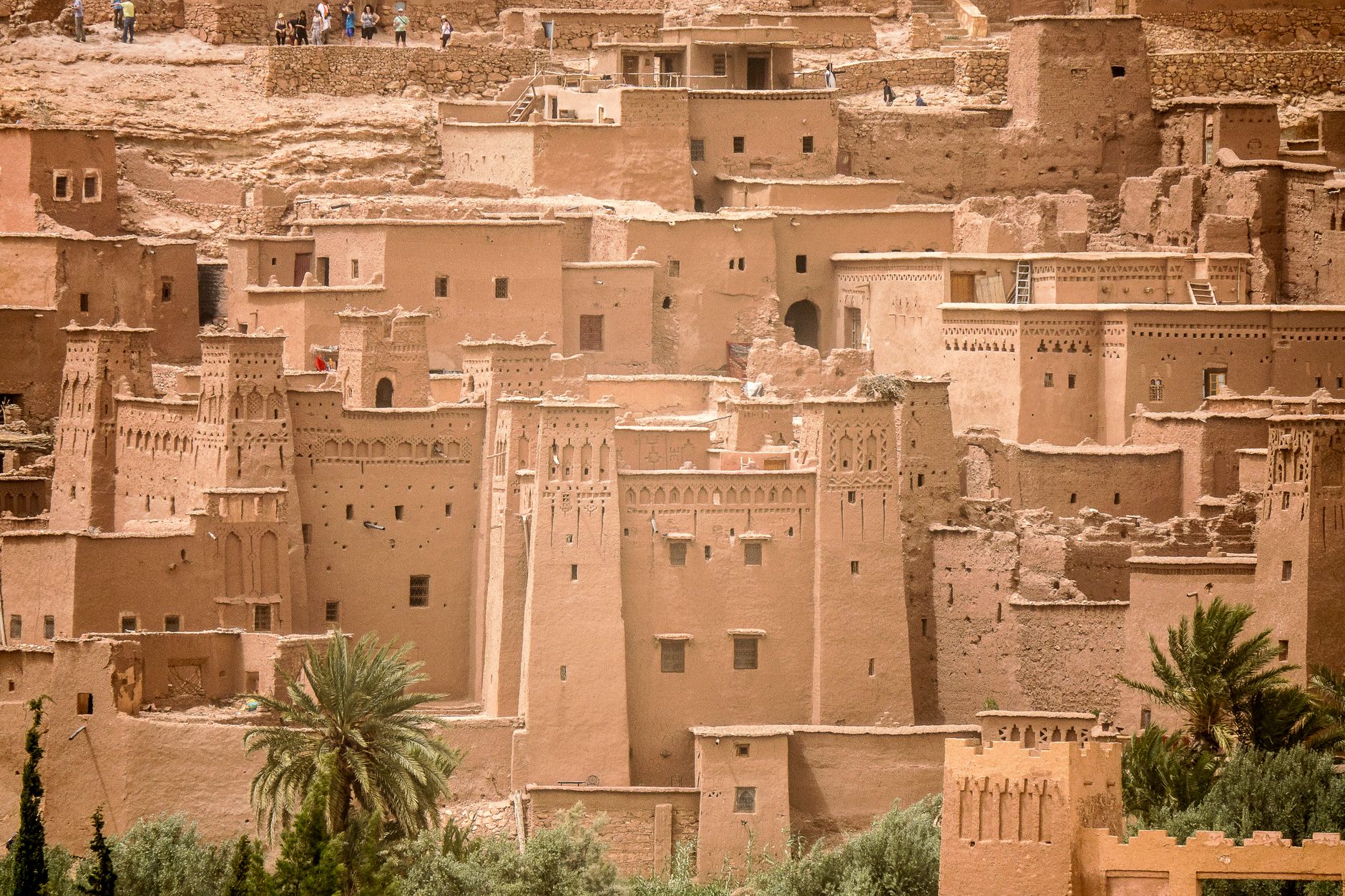
Start at the main gate and follow the narrow passage that leads to the central courtyard. The first thing you’ll notice is the towering agadir—a communal granary perched on the highest terrace. Climbing the stone staircase to the agadir rewards you with a sweeping view of the Ounila valley and the distant Atlas peaks.
Take the time to peer into the small doorways that once housed families. Many rooms are now empty, but the plastered interiors still hold the scent of centuries‑old incense. Keep an eye out for the carved wooden doors; they are a hallmark of Berber craftsmanship.
The winding alleys often open onto tiny market stalls where locals sell woven blankets and hand‑painted ceramics. If you’re interested in supporting the community, pause at the women‑led cooperatives that display Amazigh carpets and pottery.
Film History in Stone
Ait Ben Haddou’s dramatic silhouette has attracted Hollywood for decades. You’ll recognize the same walls that framed Russell Crowe’s battle scenes in Gladiator. The same ramparts later hosted the fictional city of Yunkai in Game of Thrones. Business Insider once called the site “one of the most famous places in the world” because of its film résumé.
If you’re a cinephile, bring a notebook and match the locations you see with the movies you love. The low, flat roofs were used for aerial shots in The Mummy and Prince of Persia. Knowing the back‑story adds an extra layer of excitement as you walk the same passages that actors once traversed.
Where to Eat with a View
Sunset Restaurant Ait Ben Haddou is one of several terraces facing the ksar. The eatery offers traditional Moroccan dishes—tagines, couscous, and freshly grilled seafood—while the large windows frame the ksar’s walls at dusk.
The menu leans heavily on locally sourced ingredients, so you’ll taste the region’s seasonal produce. Pair your meal with a glass of mint tea and watch the sun dip behind the desert horizon; the light changes the mud bricks from warm amber to deep russet.
If you prefer a more intimate setting, the Bagdad Café—a small riad‑style café—serves light lunches and coffee. Its courtyard is shaded by a pergola of woven reeds, offering a cool spot after a midday trek.
Where to Stay: From Basic to Boutique
- Riad Maktoub – Positioned near the main entrance, this riad provides simple rooms with rooftop terraces that overlook the ksar. It’s a convenient base if you plan to return for sunset.
- Riad Zayoute – For a step up in comfort, this guesthouse offers air‑conditioned rooms, a small pool, and a garden courtyard. Travelers often cite its friendly hosts and quiet location as highlights.
- Auberge Ksar Ait – Lined along the main road of the village, Auberge Ksar Ait delivers authentic earthen rooms and a communal dining area where you can share meals with fellow travelers.
- Kasbah du Jardin – This boutique property blends traditional architecture with a landscaped garden, providing a serene retreat after a day of exploring.
- Riad Ait Ben – Another locally owned option, Riad Ait Ben features handcrafted wooden furniture and a rooftop lounge perfect for stargazing.
All these accommodations accept cash; a few larger ones may take cards, but it’s safest to carry enough dirhams for the first night’s payment and any incidental expenses.
Practical Tips for a Smooth Visit
- Cash is king – The gate, small shops, and most restaurants only accept dirhams. ATMs are scarce near the ksar, so withdraw enough before you arrive.
- Stay hydrated – The desert climate can be unforgiving. Carry a reusable water bottle and refill it at the pharmacy or at your accommodation.
- Beware of touts – At the main road you’ll encounter friendly‑looking drivers offering private tours. If you’re not interested, a firm “Non, merci” usually ends the conversation.
- Sun protection – A wide‑brimmed hat, sunscreen, and sunglasses are essential, especially if you plan to hike up to the agadir.
- Photography etiquette – You may photograph the exteriors freely, but ask permission before snapping portraits of locals or inside private homes.
- Timing – Early morning (opening hour) and late afternoon (just before sunset) are the quietest periods. The midday heat brings the largest groups of organized tours.
- Guided tours – If you want deeper historical context, consider hiring a local guide at the entrance. Guides are usually paid in cash and can tailor the walk to your interests—architecture, film, or Amazigh culture.
Extending the Day: Combine with Nearby Highlights
A typical day trip can include a stop at Kasbah Telouet, a fortified mountain residence perched on the road to the ksar. The drive from Ait Ben Haddou to Telouet takes about 30 minutes and offers panoramic views of the High Atlas.
Atlas Studios lies a short distance outside Ouarzazate. The studio complex hosts soundstages used for many of the same films that filmed at Ait Ben Haddou. A quick tour here provides insight into the movie‑making process and adds another layer to your cinematic pilgrimage.
Both sites are reachable by the same grand taxi that brought you to the ksar; simply ask the driver to wait while you explore, then continue on to Ouarzazate for dinner.
FAQ
How do I travel from Marrakech to Ait Ben Haddou without joining a large tour?
Take a CTM or Supratours bus from Marrakech’s central bus station to the Tazentout turn‑off, then hop in a short taxi to the ksar. Leaving early keeps you ahead of the heat and the crowds.
What time of day gives the best light and the fewest visitors?
Arrive at opening, just after sunrise, for cool temperatures and soft light that highlights the earthen walls. The late‑afternoon slot before sunset also offers quieter streets and a golden glow for photos.
Can I eat a full meal inside the ksar?
There are no restaurants within the fortified walls, but Sunset Restaurant Ait Ben Haddou sits directly across the street and serves traditional dishes with a view of the ksar. Reservations are free via WhatsApp.
Which lodging options provide the most authentic experience?
Riad Maktoub, Auberge Ksar Ait, and Kasbah du Jardin all line the main road of the village and offer earthen rooms, rooftop terraces, and direct access to the ksar’s gate. They accept cash and give you the chance to mingle with local families.